Moisture
Moisture conditions at the point of contact.

TEXTILES & HYGIENE
Everyday contact. Evidence that matters.
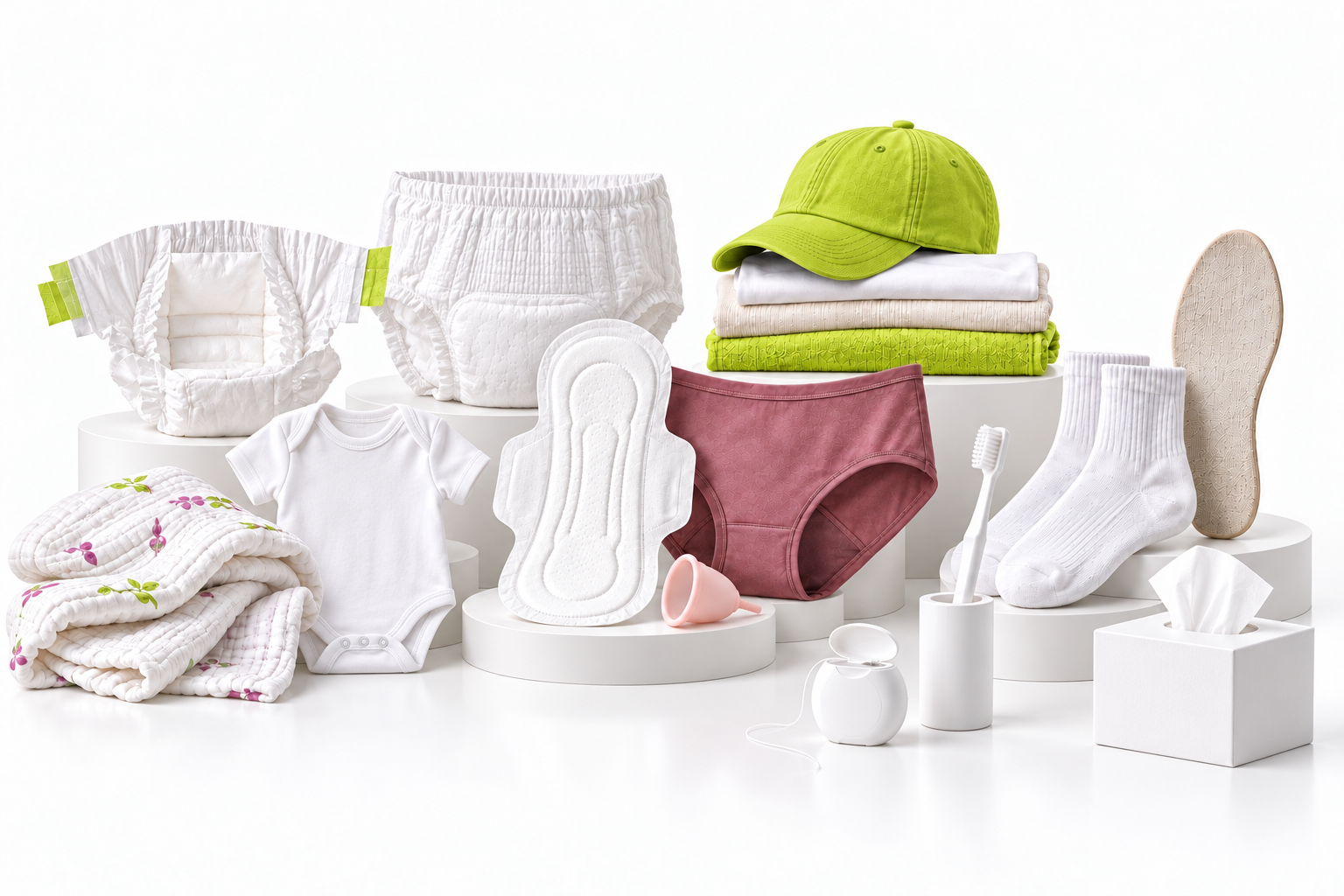
From baby diapers and feminine hygiene products to clothing and other body-contact materials, products interact with different microbial communities depending on where they are used.
MyMicrobiome assesses how products and materials affect selected microorganisms under defined laboratory conditions. Our application-specific standards provide criteria for evaluating microbiome-friendliness and determining eligibility for certification.
Our scientific team helps you identify the appropriate standard and testing scope for your product.
WHY MICROBIOME COMPATIBILITY?
Diapers, wipes, feminine hygiene products and other skin-contact materials create close, often prolonged contact with the skin.
Understanding how these materials interact with relevant microorganisms adds another dimension to product assessment. Fibres, surface structures and finishing chemistries provide a starting point for discussing material–microbiome interactions.
Understand the MyM assessment ↓THE SKIN–TEXTILE INTERFACE
Materials help shape the local environment at the skin’s surface.
Moisture conditions at the point of contact.
Air movement through and around the material.
Local temperature within the contact environment.
The fibres and structure of the textile that comes into contact with the skin.
Treatments or finishes applied to the textile that may influence its interaction with microorganisms.
These factors describe the skin–textile environment. MyMicrobiome’s microbial assessment examines responses of selected microorganisms under controlled laboratory conditions; it is not a measurement of all these factors during wear.
UNDERSTANDING THE ASSESSMENT
Product-specific evidence, assessed against an application-specific MyMicrobiome standard.
MyMicrobiome’s Hygiene and Textile Standards address different areas of body contact, including infant skin, face and body, scalp, vaginal, vulvo-vaginal, foot, oral and nasal applications.
The relevant standard defines the assessment for the product or component. Our scientific team helps identify the appropriate scope for your intended use.
FIND YOUR APPLICATION
Find familiar product examples below, or search by product name. Our scientific team will confirm the appropriate standard and testing scope.
Browse all hygiene & textile standardsWe could not find an exact match. Our team can review your intended application and advise on the next step.
Ask about your application ↗The final scope may relate to a material, component or product. The agreed assessment determines which certification statements are appropriate.
THE SCIENCE, EXPLAINED
Standardized assessment generates product-specific data on microbial responses under controlled conditions. The applicable standard defines the selected microorganisms, testing modules and acceptance criteria.
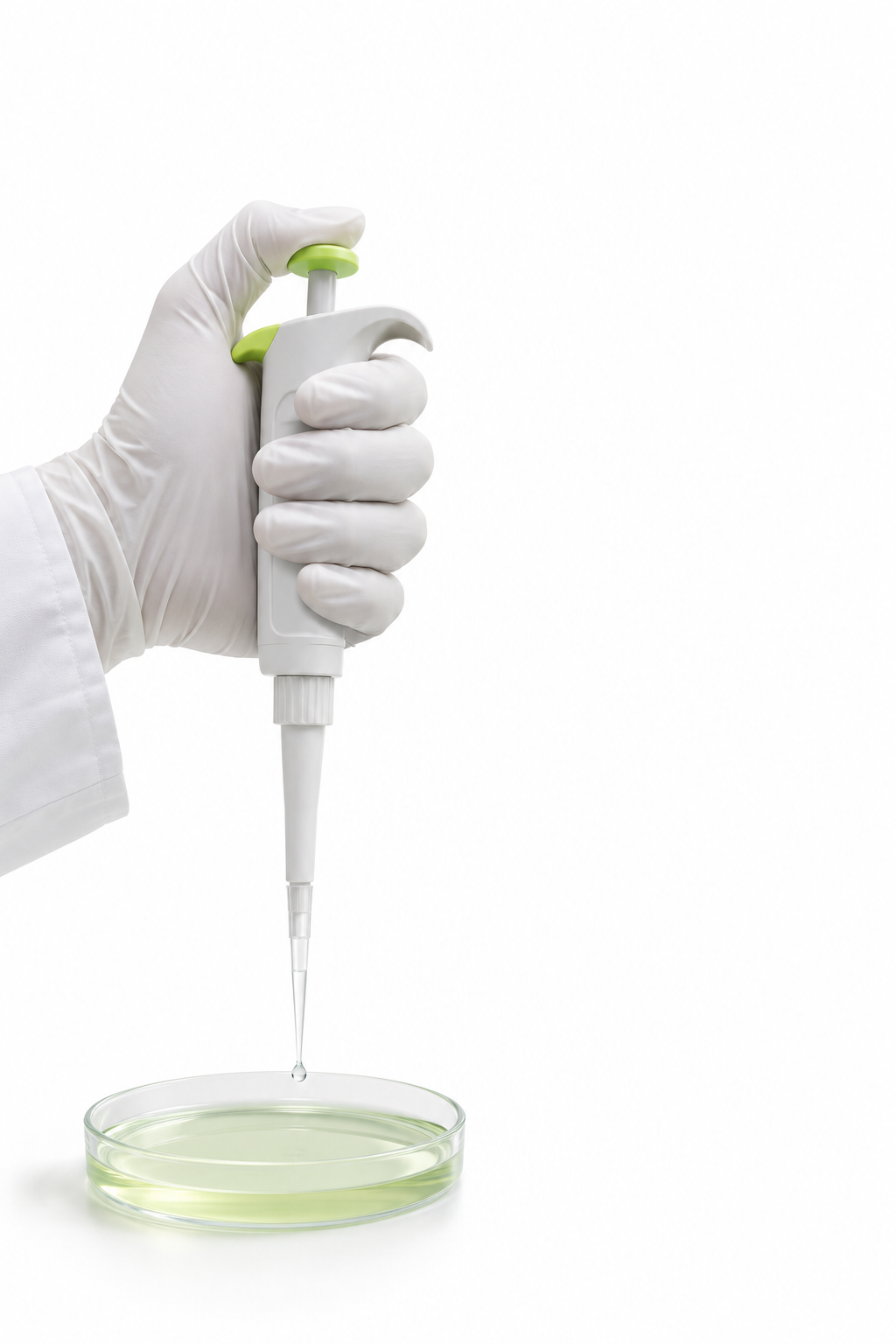
The microbial quality check verifies that the prepared textile or hygiene product is sterile, allowing subsequent tests to be carried out with the selected body-site microorganisms. Before testing, washable textiles are washed according to the manufacturer’s instructions. Screening examines the presence of mesophilic and aerobic microorganisms. Depending on the applicable protocol, textiles are decontaminated by UV irradiation or autoclaving; hygiene products are sterilised through UV light exposure.
The balance test examines two selected bacterial strains together: a common commensal of the relevant body site and a potentially harmful bacterium. This co-culture is brought into contact with the textile or hygiene product for a defined period. The ratio between the two microorganisms is then compared with an untreated control. Under the influence of the product, the ratio must not shift in favour of the potentially harmful bacterium.
The diversity test examines selected key commensal microorganisms typical of the relevant body site together in a co-culture. The co-culture is brought into contact with the textile or hygiene product, and changes in its microbial diversity are compared with an untreated control. Diversity among the selected key microorganisms must be maintained according to the criteria of the applicable standard.
The vitality test examines the selected key commensal microorganisms individually as single strains, rather than together in a co-culture. It simulates direct contact between each microorganism and the textile or hygiene product. Growth is compared with an untreated control and must be neither significantly reduced nor stimulated, according to the criteria of the applicable standard.
Results support material evaluation, product development and, where the applicable standard is met, microbiome-friendly certification.
Findings apply to the tested product and laboratory conditions. They do not by themselves demonstrate clinical safety, health benefits or treatment effects.
YOUR PATH TO CERTIFICATION
For brands, manufacturers and material suppliers. You do not need to choose a standard before your first enquiry.
Tell us about intended use, material composition, construction and variants.
Confirm the applicable assessment, quotation, agreements and sample requirements.
Send the agreed materials and documentation for laboratory testing in Switzerland.
Receive the agreed documentation and discuss the results and certification decision.
Following successful assessment and the required agreements, use approved artwork within the licensed scope.
FROM TEST RESULTS TO MARKET COMMUNICATION
A clear record of the assessment, plus practical ways to communicate successful certification.
A testing report / protocol records the assessment of your product or component against the agreed standard. Your team can use this product-specific evidence to support its microbiome-friendly claim documentation.
After successful testing and certification, you receive an official certificate. With a valid licence agreement, you can use the Microbiome-friendly seal on the certified product or its packaging, website and marketing materials.
Your successfully certified product and test report are published on MyMicrobiome.info. Link customers, retailers and business partners to the listing so they can verify the certification information.
A staff webinar and training materials help your team understand and explain the certification. Newsletter, press-release and social-media support is available on request; discuss the relevant activities with MyMicrobiome.
Certification supports describing the assessed product or component as “microbiome-friendly” within its certified application.
Match the wording to your certificate and licence. A certified component does not automatically certify the whole product. Claims about treating conditions or preventing infections require separate evidence.
Explore certification communication ↗SCIENTIFIC EXPERTISE
MyMicrobiome develops application-specific standards and coordinates independent testing in Switzerland with laboratory partner Dr. Risch.
Dr. Risch provides laboratory medicine and microbiology services across Switzerland and Liechtenstein. The MyMicrobiome team confirms the laboratory scope and documentation relevant to your product.
Explore Dr. Risch ↗A CLEAR DIVISION OF RESPONSIBILITIES
Applicable standards, scope coordination, certification and licensing.
Assessment of the agreed samples under defined conditions.
CERTIFICATION IN PRACTICE
Infant skin · Standard 40.10
Certified topsheet components for infant-skin applications. Certification applies to the listed components, rather than every finished diaper.
View certification listing ↗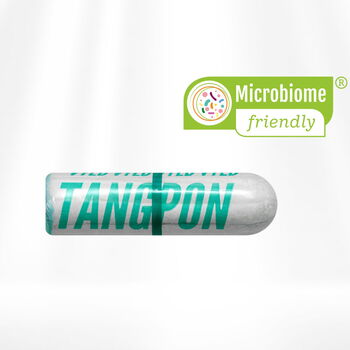
Vaginal microbiome · Standard 41.10
A kelp-based tampon listed as “Tangpon” in MyM’s certified-product database.
View certification listing ↗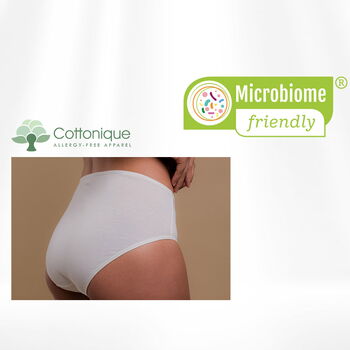
Vulvo-vaginal · Standard 45.10
An intimate garment assessed under Standard 45.10. Certification applies to the listed product.
View certification listing ↗INSIGHTS & FURTHER READING
Explore Kristin’s public conversation with AIZOME about bedding, textile contact and the skin microbiome.
View Kristin’s discussion ↗MyMicrobiome’s original textile certification announcement, published on 20 April 2023.
Read the announcement ↗YOUR QUESTIONS
Practical answers to help start the conversation.
The scope depends on product construction, materials and intended contact. Share your specifications so the team can identify the components that require assessment and the scope of any subsequent certification.
Potential grouping requires review. Identical raw materials alone do not establish identical assessment needs. Construction, skin-contact components and differences between variants also matter.
The intended contact area and application determine the relevant assessment. Our team will help select the appropriate standard. Published textile standards include infant skin, face and body, scalp, intimate, foot, oral and nasal applications.
Preparation depends on the applicable protocol. MyM’s public textile standards describe washing and decontamination steps. Confirm the preparation conditions and relevance of wash cycles for your product with the scientific team before sending samples.
Start with the product type, intended use, composition of skin-contact materials, construction, variants and target date. The team will confirm sample quantities, documentation and shipping instructions for the agreed scope.
Timing depends on the scope, sample readiness, laboratory scheduling and any additional testing. Please share your launch date so the team can confirm an estimated timeline for your product before testing begins.
Request a quotation for your product and variants. The team will explain testing charges and applicable licence fees. The quotation and agreements define the deliverables and conditions.
Seal use follows successful assessment and completion of the applicable certification and licence requirements. Use approved artwork and communicate only the assessed scope, in line with the licence agreement and usage guidance.
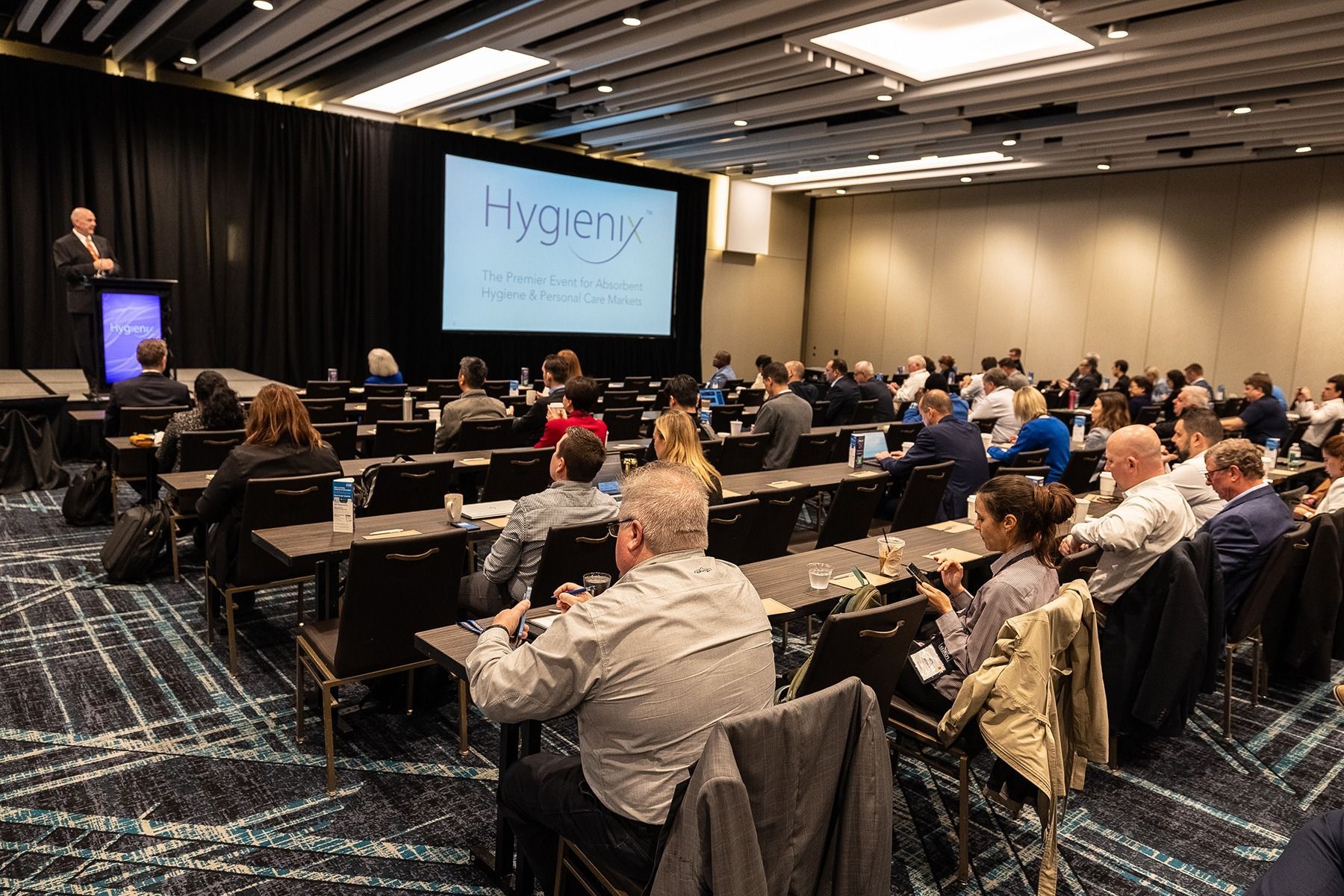
HYGIENIX 2026 · HOUSTON
Explore how body-site-specific microbial assessment supports textile and hygiene product development and microbiome-friendly certification.
16–19 November 2026
Hyatt Regency Houston · Houston, Texas
Please mention Hygienix and your preferred meeting time in your enquiry.

M.Sc. Biology · Scientific Sales Manager
LET’S START WITH YOUR PRODUCT
Our scientific team can help identify the right assessment for your product.
[email protected]
+41 71 422 25 25
Our scientific sales team reviews your enquiry, asks for any additional product details and discusses the relevant assessment and quotation with you.
MyMicrobiome AG
Schloss Hauptwil 1 · 9213 Hauptwil · Switzerland
Tell us about your product, its intended use and the materials in contact with the body.
Contact our scientific team ↗By clicking "Accept all", you agree to cookies being stored on your local device. This improves navigation on the site, video content can be displayed and we can anonymously analyse whether the pages are being used as intended. All approvals are made in accordance with the provisions of the GDPR.
Hit enter to search or ESC to close